introduction
A music video or song video is a short film integrating a song and imagery, produced for promotional or artistic purposes. Modern music videos are primarily made and used as a marketing device intended to promote the sale of music recordings. Although the origins of music videos date back much further, they came into prominence in the 1980s, when MTV based their format around the medium. Prior to the 1980s, these works were described by various terms including "illustrated song", "filmed insert", "promotional film", "promotional clip", "promotional video", "song video", "song clip" or "film clip". Music videos use a wide range of styles of film making techniques, including animation, live action filming, documentaries, and non-narrative approaches such as abstract film. Some music videos blend different styles, such as animation and live action. Many music videos interpret images and scenes from the song's lyrics, while others take a more thematic approach. Other music videos may be without a set concept, being merely a filmed version of the song's live performance.
history


un-official video's
Unofficial, fan-made music videos ("bootleg" tapes) are typically made by synchronizing existing footage from other sources, such as television series or movies, with the song. The first known fan video, or songvid, was created by Kandy Fong in 1975 using still images from Star Trek loaded into a slide carousel and played in conjunction with a song. Fan videos made using videocassette recorders soon followed.With the advent of easy distribution over the internet and cheap video-editing software, fan-created videos began to gain wider notice in the late 1990s. Videos are sometimes known as OPV, Original Promotional Videos (or sometimes Other People's Videos). A well-known example of an unofficial video is one made for Danger Mouse's illegal mash-up from his The Grey Album, of the Jay-Z track Encore with music sampled from the Beatles' White Album, in which concert footage of the Beatles is remixed with footage of Jay-Z and rap dancers.
In 2004, a Placebo fan from South Africa made a claymation video for the band's song "English Summer Rain" and sent it to the band. They liked the result so much that it was included on their greatest hits DVD.
types of music videos
THESE ARE SOME OF THE GENRE'S
narrative
Narrative means the different ways in how you present written or spoken events i.e. narrating at a play or presenting a speech. A narrative based music video uses more footage that attempts to tell a story. These types of music videos are linked to the lyrics of the song as they tend to usually have a storyline. An example of a narrative based music video is the song If I Were a Boy by Beyoncé. The video starts with Beyoncé and her husband saying a few words that are linked to relationships i.e. honesty and commitment. The video then begins with Beyoncé getting ready for work as a police officer in NYC with her husband preparing her breakfast and supporting her in her role. As the caring husband he is, he tries to find the perfect gift to give to her which is a pair of earrings. As this is going on, the music video cross cuts to Beyoncé and her male work partner solving crimes. Once Beyoncé goes home, her husband gives her the earrings and they both set off out to a party. Once they arrive, Beyoncé immediately goes to her male work partner and dances with him, leaving her husband behind. The couple argue as the husband was not pleased to see her dancing with other men. As they were arguing, Beyoncé says “Why are you so jealous?”, once this had been said, the roles switched back. Beyoncé was the heartbroken one seeing her husband dancing with his female work partner at the party. This was shown when he repeated “Why are you so jealous?”. As the roles reverse, it leaves Beyoncé crying and her husband going off to work and spending more time with his officers, mostly the female officer. The husband feels as if she is making a problem out of nothing, taking his wife for granted. Another example of a narrative based music video is You Belong with Me by Taylor Swift. This is because she is a typical teenager at high school having a crush on a boy who hasn’t noticed her as he is head of the football team and his girlfriend (the most popular girl in school) is head cheerleader. The lyrics “you belong with me” are repeated throughout the narrative production.
performance
Performance means where you perform an act i.e. concert, play or other form of entertainment. Performance based music video is a music video which presents the artist/band throughout the entire song; an example of this is ‘American Idiot’ by Green Day. The song itself was inspired by American political event, like the presidency of George Bush and the Iraq war. The video has the features of a performance based music video as it includes the lead singer, Billie Joe Armstrong, a guitarist and a drummer. The camera angles focus on each of the band members. These camera angles also emphasise the punk rock and the personalities of the band. The performance based video is emphasised by the camera shots showing the cameras recording the band singing their song. They are performing in what seems to be a studio performing to the camera. However, even though the band are performing, the video could also be linked to ‘concept based music video’ as the video has nothing to do with the song itself and the theory behind the song.
concept
Concept based music video means that the director has one single idea or theme that doesn't match the video to the song. For example, this is shown in the music video of Fluorescent Adolescent by Arctic Monkeys. The song is about a woman who dreams of her childhood whilst living an unsatisfying and boring life as an adult. The music video however, has nothing to do with the song. This is because there are two groups of men, clowns and non-clowns, meeting at an old warehouse having a fight amongst the opposing gang. The music video includes flash backs of the group leaders showing the audience that they were friends yet now they are attempting to kill each other. The non-clown leader tries to run over the clown yet the clown notices that oil is leaking from under the non-clown’s car, therefore coming up with a plan of dropping his lighter onto the floor. The music video ends with the non-clown burning to ashes whilst being trapped in the car, the war of the groups is over.
lyrical
A lyric video is a music video where the lyrics appear on screen. The first level of innovation came by making the font and visuals match the song – sweet font and vibrant colours for a bubble gum pop song, edgy font and more hard-core imagery for heavy metal. The next level of innovation was the style of animation for the visuals and text – slow and sexy or fast and impactful. Those are the basics and can be seen in Jodie Abacus’ video I’ll Be That Friend. Notice the vibrant images matching the tone of the song and the font design? It feels right. But lyric videos don’t stop there, it can even be fused with other video types to create something cool and new. Take Ariana Grande’s Everyday which fuses lyric and performance videos or one of my personal favourites Suit & Tie from Justin Timberlake ft. Jay Z which combines lyric, narrative, concept AND animation! Now how cool is that?
styles of music video
THESE ARE SOME OF THE STYLE'S
CONCERT
In Concert music videos have a sense of realism and they appeal to viewers who perhaps cannot go and see them in concert all the time, so they can see what it looks like for a change. It also might give viewers an incentive to go and see the band live. Sometimes they can be staged to look like they are live. Feel This Moment" is a song by Pitbull featuring Christina Aguilera that was released in January 2013. The song is about stopping to take a moment and appreciate life. Set to a thumping club beat, the rapper spits "Lets stop time and enjoy this moment."
So I would guess that he tried to think of something that would be a great 'moment' in his life; watching a crowd of people screaming his name to his music. Throughout the music video, we see some shots of him wearing casual clothes, rapping alone in a small room , before (in an expensive suit) he jumps/walks/elevates into a huge arena filled with thousands of screaming fans.
IMPRESSIONIST
Impressionist means "an artists take/impression on something". So music videos that have a particular theme or style that is portrayed in a unique way by the artist means that it is an impressionist music video.
"Get Away" is a single by Snoop Lion featuring Angela Hunte and was released in January 2014.
The music video fits into the style of both animation, homage and impressionist. It pays homage to the '90s themed Pokemon Games. Nostalgia will flow for fans of the classic Game Boy release as they watch an 8-bit version of Snoop Lion patrolling the reconstructed world reminiscent of the original games.
He even battles a trainer, Major Lazer, who co-produced the track.
Surrealist
Surrealist music videos are videos that contain a style that are so strange and unreal that it's almost impossible that the situation would ever happen. Surrealist videos sometimes contain a lot of animation. They are sometimes fun and exciting which does appeal to younger children. But some music artists take an impression of a certain artist or sculptor and use their style in the music video.
"Year 3000" is a single by Busted that was released in January 2003. The song describes how the band thinks the world will be like in almost 1000 years. As you could imagine before even listening to the song or watching the video, this idea has endless possibilities for imagination. So surrealism in this video is almost vital.
The story follows Busted getting into a "flux-capacitor" which travels into time to the Year 3000. To make the story more interesting they used animation as well.
PARODY
Parody music videos are designed to mock or tease an original piece of work, normally in a bad way. It is very similar to pastiche, except it generally has a bad and funny way of representing it. Parodies have got a lot more popular in recent years and some Youtube Artists have become famous because of their parodies. "22" Parody is a single by Bart Baker that was released in April 2013. It is a parody of the single "22" by Taylor Swift. In the original music video by Swift, she goes through a day in life when she is 22 years old and shows how most people at her age are at the point in their lives when they can have so much fun.But in this parody version, Baker uses the same tune but doesn't mock the original meaning of the song.
HOMAGE
Homage style music videos mean that the video pays a tribute to a particular time or event. It is a way for artists to show their respect to others. These videos can influence viewers and make them remember or sympathize for a specific time or place.
"Hey Brother" is a song performed by Avicii. The music video was released in December 2013. This music video pays homage to the men and women of the armed forces in the US. The video contains clips from the Vietnam War and shows a young boy who imagines his father (who died in the Vietnam War) as the older brother he never had.
Referencing
Referencing in music videos is a way of portraying a certain other subject. Soundtrack videos sometimes have references to the film themselves. If a music video contains certain references from a film then it creates a bigger audience, a lot like pastiche films.
Beyonce's nickname "Honey Bee" in the video is a clear reference to "Honey Bunny" which was the nickname given to Yolanda, who was one of the two robbers in the famous diner scene of Pulp Fiction.
The "To Be Continued..." title card at the end of the video is a great similarity to John Travolta's line in Pulp Fiction.
The font, style and colours of the text in the video are very similar to the text in Jackie Brown.
When the two girls are having banter in the car, it is a very clear reference of the style in Death Proof.
Before the music video of "Telephone" was created, Lady Gaga had a meeting with Quentin Tarantino and discussed the plot and style of the music video, so there was a big reason that all these references were made.
CONVENTIONS
LYRIC INTERPRETATION
When creating a music video, one of the conventions you will think about is lyric interpretation. When a director listens to a song, they will createa video based around what their interpretation of the lyrics are. Ourown interpretation may then be based around the visuals produced aswell as our own opinion of the lyrics. A good example for demonstratingdifferences in interpretation is Bob Seger and the Silver Bullet Band.
Turn the Page. Upon it’s original release, it was interpreted to be about a musician who got anxious when looked at. However, when Metallicadid a cover of the song, a second music video was released for their version. This video interpreted the song as about a woman who is aprostitute to get money to look after her young daughter.
EXTENDING SONGS' MEANING
A song’s meaning can be extended which means that the action and images featured in the music video are being used to the promote the meaningof the song. This leaves the song open to other interpretations. An example of this is in the music video for Madonna’s Like A Prayer which features imagery of burning crosses and what appears to be a depiction of Jesus as a black man whom she kisses.
CONSOLIDATING SONGS' MEANING
Rather than extending a song’s meaning, you can consolidate it so that, rather than opening the meaning of a song, you are using images joinedwith the sound and music which has an emphatic effect on the message that the music video is promoting. An example of this is for Avenged Sevenfold’s song ‘Gunslinger’ which is about those that you leave behind when going to war.
ALLUSION
Allusion is when a reference to a person, existing text, place or event ismade within a music video. It could be fairly obvious or totally discreet but either way, many music videos feature conventions such as this. For example, in the music video for Metallica’s ‘All Nightmare Long’ which makes reference to the Tunguska event in 1908 as well as thespeculative conjecture that circulated around it.
LINKS TO OTHER ARTISTS
In a different way to allusion, music videos may also make reference toot her artists. This means that the video could be either paying homage to that artists style or parodying their style (or previous videos). An example of this is David Brent’s ‘If you don’t know me by now’ where
Ricky Gervais is featured paying homage to the style of artists such as Simply Red.
theorists

Roland Barthes was a French literary theorist, philosopher and critic. Barthes’ ideas explored a diverse range of fields and he influenced the development of schools of theory including structuralism, existentialism and social theory to name but a few.
Barthes describes a text as. “a galaxy of signifiers, not a structure of signifies; it has no beginning; it is reversible; we gain access to it by several entrances, none of which can be authoritatively declared to be the main one; the codes it mobilises extend as far as the eye can read, they are indeterminable. The systems of meaning can take over this absolutely plural text, but their number is closed, based as it is on the infinity of language.” – 1974.
Barthes argued that the reader produces new meanings when reading a text, making use of previous experience. Therefore, different people read different things from a text. Texts may be open, this means that they may have many meanings or interpretations. Texts may also be closed, this means that there is only one meaning. Barthes had a series of narrative codes. The most well known is the enigma code. This is the ‘hook’ or mystery to be resolved for the audience. He also believed the narrative was made up of ‘signifiers’, objects that brought meaning to the narrative.
Music videos often create predictable ideas and representations about people, places and society and ‘Myths’ are created, which seem to support the dominant ideology of society. As such, it could be argued that most mainstream music videos are reactionary.
Barthes explains that ‘myth is a type of speech’. What Barthes means by this is that myth is a system of communication. Myth is not a particular object but rather the ‘the way in which (an object) utters a message’. Barthes explains that myth ‘is a second-order sociological system‘. Barthes is arguing that myth is a metalanguage; an overarching language which rationalises and organises thought and perception. Myth is the system of communication which naturalises the political nature of a products’ consumption and production; myth is a system of communication which naturalises dominant cultural and historical values and attitudes.
Stereotypically in the media ‘Men were much more likely to adventurous, active, and victorious, whereas women were more frequently shown as weak, ineffectual, victimized, supportive, or laughable or merely ‘token females.’ Some media texts challenge these stereotypical gender representations such as in the film 'Tombraider' in which 'Laura Croft' plays the leading protagonist, seen as 'adventurous'.

Goodwin states that ‘Music videos ignore common narrative as they are essentially advertisements. As consumers, we make up our own meaning of a song in our minds: a music video can anchor meaning and gives the record company/artist a method of anchoring meaning.’ Andrew Goodwin expressed that the editing of the film is cut to the beat. This allows the viewer to follow the narrative (if a concept video) at the same tempo as the music and subconsciously follow the plot easier. Also the visuals displayed are usually repeated, which emphasises the repetition of the lyrics and rhythm in the song.
Music videos demonstrate genre characteristics (e.g. stage performance in a metal video, dance routine for a girl boy band.)
This convention explains how Goodwin notice a music video’s visuals either had a complete similarity or direct contrast to the lyrics of the song.
An example of this is within the music video ‘Someone Like You’ by Adele’ a lyrical phrase includes ‘for me, it isn’t over’, there is reaction shot of the artist, appearing to be very emotional in connection with this. This make the audience sympathise with Adele as a result.
There is a relationship between the lyrics and visuals (illustrative, amplifying, or contradicting).
Goodwin identified that the visuals within a music video may be edited in time to the lyrics/ change in tempo of the music. He also stated that the visual are commonly repeated within a chorus to emphasize the repetition in lyric and beat.
Genre-related style and iconography is present.
Goodwin recognised that most artists/directors have a certain style repeating certain actions within theory music videos in order to establish this as their ‘trademark’ and therefore allowing their to be recognized due it to reoccurring often. This represents the style of the music the artist is represent and is a marketing strategy in order to be remembered in years to come.
The demands of the record label include the need for lots of close-ups of the artist, and the artist may develop motifs which recur across their work (a visual style).
Goodwin identified that it is a common feature for record labels to use close ups of the artist/vocalist in order to promote the sales of the individual song and album/single. This convention is used in order to show the artist throughout the video is most common with female artist as provocative angles are often used to create sexual imagery of the artist following Laura Mulvey’s Male Gaze Theory causing a fetish from the audience towards the artist.
There is frequently reference to the notion of looking (screens within screens, telescopes, etc.) and particularly voyeuristic treatment of the female body.
Goodwin recognised that many music videos tend to include voyeuristic images and camera angles of women in order to entice a male audience’s interest in the artist also the lyric to which these shots represent. For example, in the artist Rihanna’s music video ‘What’s my Name’. We can see at this point Rihanna walking through a supermarket. There is an over the shoulder shot of a man, who is out of focus looking at her. With the misé-en-scene used in the scene in terms of costume Rihanna wears a pair of revealing shorts with fluorescent colours.
There is often inter-textual reference (to films, TV programmes, other music videos, etc).
Goodwin recognised that it was not uncommon for a viewer to notice either the visuals or lyrics of song to be a direct reference to another media text. This used to engage the audience and provide them gratification if they recognise the link. For example in MIKA’s ‘Popular Song’ there is a reference to the music ‘Wicked’ in terms of lyrics and melody in the chorus.

Propp identified a sequence of narrative elements (or 'functions') that typically occurred within Russian fairy tales. He identified 31 functions in Russian folklore and fairy tales. These functions occurred in a typical order within each story, with some variation. This type of structural analysis of folklore is the "syntagmatic" manner of assessment (as termed following Lévi-Strauss 1964: 312). Another example of syntagmatic analysis is the Hero's journey. This focus on the events of a story and the order in which they occur is in contrast to another form of analysis, "paradigmatic" (cf. Sebag 1963:75). That describes instead the underlying pattern (usually based upon a priori binary principle of opposition) of the folkloric text. For paradigmatic analysis, elements of the plot may be taken out of their "given" chronological order within the story and regrouped in various analytic schemes.
Respectively equivalent to syntagmatic and paradigmatic are the terms "diachronic" and "synchronic". Diachronic covers the sort of analysis that conveys a sense of traversing the highs and lows of a story, like riding the pattern of a sine wave.[2] The second term, synchronic, is where the story is instead absorbed as a whole, like the pattern of a circle. Most literary analyses are synchronic, offering a greater sense of unity among the components of a story. Although both structural analyses convey partial information about the story, each angle of analysis delivers a different set of information.
After the initial situation is depicted, the tale takes the following sequence of functions:
-
ABSENTATION: A member of the hero's community or family leaves the security of the home environment. This may be the hero themselves, or some other relation that the hero must later rescue. This division of the cohesive family injects initial tension into the storyline. This may serve as the hero's introduction, typically portraying them as an ordinary person.
-
INTERDICTION: A forbidding edict or command is passed upon the hero ('don't go there', 'don't do this'). The hero is warned against some action.
-
VIOLATION of INTERDICTION: The prior rule is violated. Therefore the hero did not listen to the command or forbidding edict. Whether committed by the Hero by accident or temper, a third party or a foe, this generally leads to negative consequences. The villain enters the story via this event, although not necessarily confronting the hero. They may be a lurking and manipulative presence, or might act against the hero's family in his absence.
-
RECONNAISSANCE: The villain makes an effort to attain knowledge needed to fulfill their plot. Disguises are often invoked as the villain actively probes for information, perhaps for a valuable item or to abduct someone. They may speak with a family member who innocently divulges a crucial insight. The villain may also seek out the hero in their reconnaissance, perhaps to gauge their strengths in response to learning of their special nature.
-
DELIVERY: The villain succeeds at recon and gains a lead on their intended victim. A map is often involved in some level of the event.
-
TRICKERY: The villain attempts to deceive the victim to acquire something valuable. They press further, aiming to con the protagonists and earn their trust. Sometimes the villain make little or no deception and instead ransoms one valuable thing for another.
-
COMPLICITY: The victim is fooled or forced to concede and unwittingly or unwillingly helps the villain, who is now free to access somewhere previously off-limits, like the privacy of the hero's home or a treasure vault, acting without restraint in their ploy.
-
VILLAINY or LACKING: The villain harms a family member, including but not limited to abduction, theft, spoiling crops, plundering, banishment or expulsion of one or more protagonists, murder, threatening a forced marriage, inflicting nightly torments and so on. Simultaneously or alternatively, a protagonist finds they desire or require something lacking from the home environment (potion, artifact, etc.). The villain may still be indirectly involved, perhaps fooling the family member into believing they need such an item.
-
MEDIATION: One or more of the negative factors covered above comes to the attention of the Hero, who uncovers the deceit/perceives the lacking/learns of the villainous acts that have transpired.
-
BEGINNING COUNTERACTION: The hero considers ways to resolve the issues, by seeking a needed magical item, rescuing those who are captured or otherwise thwarting the villain. This is a defining moment for the hero, one that shapes their further actions and marks the point when they begin to fit their noble mantle.
-
DEPARTURE: The hero leaves the home environment, this time with a sense of purpose. Here begins their adventure.
-
FIRST FUNCTION OF THE DONOR: The hero encounters a magical agent or helper (donor) on their path, and is tested in some manner through interrogation, combat, puzzles or more.
-
HERO'S REACTION: The hero responds to the actions of their future donor; perhaps withstanding the rigours of a test and/or failing in some manner, freeing a captive, reconciles disputing parties or otherwise performing good services. This may also be the first time the hero comes to understand the villain's skills and powers, and uses them for good.
-
RECEIPT OF A MAGICAL AGENT: The hero acquires use of a magical agent as a consequence of their good actions. This may be a directly acquired item, something located after navigating a tough environment, a good purchased or bartered with a hard-earned resource or fashioned from parts and ingredients prepared by the hero, spontaneously summoned from another world, a magical food that is consumed, or even the earned loyalty and aid of another.
-
GUIDANCE: The hero is transferred, delivered or somehow led to a vital location, perhaps related to one of the above functions such as the home of the donor or the location of the magical agent or its parts, or to the villain.
-
STRUGGLE: The hero and villain meet and engage in conflict directly, either in battle or some nature of contest.
-
BRANDING: The hero is marked in some manner, perhaps receiving a distinctive scar or granted a cosmetic item like a ring or scarf.
-
VICTORY: The villain is defeated by the hero – killed in combat, outperformed in a contest, struck when vulnerable, banished, and so on.
-
LIQUIDATION: The earlier misfortunes or issues of the story are resolved; object of search are distributed, spells broken, captives freed.
-
RETURN: The hero travels back to their home.
-
PURSUIT: The hero is pursued by some threatening adversary, who perhaps seek to capture or eat them.
-
RESCUE: The hero is saved from a chase. Something may act as an obstacle to delay the pursuer, or the hero may find or be shown a way to hide, up to and including transformation unrecognisably. The hero's life may be saved by another.
-
UNRECOGNIZED ARRIVAL: The hero arrives, whether in a location along their journey or in their destination, and is unrecognised or unacknowledged.
-
UNFOUNDED CLAIMS: A false hero presents unfounded claims or performs some other form of deceit. This may be the villain, one of the villain's underlings or an unrelated party. It may even be some form of future donor for the hero, once they've faced their actions.
-
DIFFICULT TASK: A trial is proposed to the hero – riddles, test of strength or endurance, acrobatics and other ordeals.
-
SOLUTION: The hero accomplishes a difficult task.
-
RECOGNITION: The hero is given due recognition – usually by means of their prior branding.
-
EXPOSURE: The false hero and/or villain is exposed to all and sundry.
-
TRANSFIGURATION: The hero gains a new appearance. This may reflect aging and/or the benefits of labour and health, or it may constitute a magical remembering after a limb or digit was lost (as a part of the branding or from failing a trial). Regardless, it serves to improve their looks.
-
PUNISHMENT: The villain suffers the consequences of their actions, perhaps at the hands of the hero, the avenged victims, or as a direct result of their own ploy.
-
WEDDING: The hero marries and is rewarded or promoted by the family or community, typically ascending to a throne.
Some of these functions may be inverted, such as the hero receives an artifact of power whilst still at home, thus fulfilling the donor function early. Typically such functions are negated twice, so that it must be repeated three times in Western cultures.
genre
A music genre is a conventional category that identifies some pieces of music as belonging to a shared tradition or set of conventions. It is to be distinguished from musical form and musical style, although in practice these terms are sometimes used interchangeably.not in citation given] Recently, academics have argued that categorizing music by genre is inaccurate and outdated.
Music can be divided into different genres in many different ways. The artistic nature of music means that these classifications are often subjective and controversial, and some genres may overlap. There are even varying academic definitions of the term genre itself. In his book Form in Tonal Music, Douglass M. Green distinguishes between genre and form. He lists madrigal, motet, canzona, ricercar, and dance as examples of genres from the Renaissance period. To further clarify the meaning of genre, Green writes, "Beethoven's Op. 61 and Mendelssohn's Op. 64 are identical in genre – both are violin concertos – but different in form. However, Mozart's Rondo for Piano, K. 511, and the Agnus Dei from his Mass, K. 317 are quite different in genre but happen to be similar in form." Some, like Peter van der Merwe, treat the terms genre and style as the same, saying that genre should be defined as pieces of music that share a certain style or "basic musical language." Others, such as Allan F. Moore, state that genre and style are two separate terms, and that secondary characteristics such as subject matter can also differentiate between genres. A music genre or subgenre may also be defined by the musical techniques, the style, the cultural context, and the content and spirit of the themes. Geographical origin is sometimes used to identify a music genre, though a single geographical category will often include a wide variety of subgenres. Timothy Laurie argues that since the early 1980s, "genre has graduated from being a subset of popular music studies to being an almost ubiquitous framework for constituting and evaluating musical research objects".
Among the criteria often used to classify musical genres are the trichotomy of art, popular, and traditional musics.
Alternatively, music can be divided on three variables: arousal, valence, and depth. Arousal reflects the energy level of the music; valence reflects the scale from sad to happy emotions, and depth reflects the level of emotional depth in the music. These three variables help explain why many people like similar songs from different traditionally segregated genres.
different music genre's of video's
Electronic Dance Music: Generally referred as EDM, this form of music is produced by DJs who add dozens of tones to a piece to create unique music. You can hear them in clubs or even live, depending upon your accessibility for the same. In the early twenties, electronic dance music was known in the form of Jamaican dub music, the electronic music of Kraftwerk, the disco music of Giorgio Moroder, the Yellow Magic Orchestra and many more.
Rock Music: Originated as “Rock & Roll” in the United States, Rock music has been rocking the world since the 1950s. It is a form of music that started actually around string instruments, but now uses other modern instruments too making it a little difficult to give it an accurate definition. Its loud and strong beats make it popular among the youths. Some of the rock stars who have popularized the culture include Little Richard, Bill Haley and Chuck Berry while rock bands like Pink Floyd, The Doors, Metallica, Nirvana and Megadeth are the modern bands who have taken the culture by storm.
-
Jazz: Identified with swing and blue notes, Jazz has its roots both in the West African and European culture. It is said that Jazz is “One of America’s original art forms” and boasts a unique combination of creativity, coactions and interactivity. Originating in the late 19th to early 20th century, Jazz has also played an important role in introducing the world to a number of women performers like Ella Fitzgerald, Betty Carter, Abbey Lincol.
-
Rhythm and Blues:Vocalists like Rihanna, Mariah Carey, Beyoncé, Usher and the legendary Michael Jackson have all made it huge in the music industry with their love for this form of music. Originated in the 1940s, this African-American music is a combination of hip hop, funk, dance, pop and soul focusing on themes like relationships, sex and freedom.
-
Techno:You may have listened to a number of techno music while clubbing, but it is Detroit techno that is considered to be the foundation of this form of music. Unlike the days of its emergence, the use of technology today has greatly enhanced the quality of techno style music and popularizing it among people day by day.
Country:Music:Another popular genre of American music which originated in the 1920s, Country music has its roots from American folk and western music. It is formed using simple forms of instruments ranging from electric and steel guitars to drums and mandolin or mouth organ. Some very popular country music singers include Shania Twain, Johnny Cash Taylor Swift and Kenny Rogers.
Electro: A perfect blend of hip hop and electronic music, electro or electro-funk uses drum machine, vocoder and talkbox helping it to distinguish itself from another similar form of music, Disco. Notable artists who have been into this form of music include Arthur Baker, Freeez, Man Parrish and Midnight Star.
-
Indie Rock:Falling in the genre of alternative rock music, Indie Rock originated in the 1980s and has gradually changed the music industry. After a decade, it also gave birth to a couple of sun-genres in related styles such as math rock, emo, noise pop, post rock and lo-fi.
-
Pop Music:“Pop” is a term derived from “Popular” and thus Pop Music is known to be a genre of popular music. With its roots in the rock & roll style, this form can include any form of music ranging from urban and dance to rock, country and Latin. Instruments highly used are electric guitars, synthesizer drums as well as bass and one can listen to this form of music by listening to songs by Britney Spears, Madonna, Beyonce Lady Gaga and of course the “King of Pop”, Michael Jackson.
-
Rap: Men: Eminem- Rap God: This music video represents the criticism Eminem has received and he mocks them and proves to them that he deserves his fame. He does this by rapping faster than any other rap artist at the time and makes the beat sound much stronger than other rap music. All of this represented in the music video through the sci-fi theme and the increase in tension and enthusiasm of the video, up to the point where he raps the fastest in the song. All of this not only makes the lyrics and visuals match, but also allows him to talk to the viewers as he is proving them that he deserves his title of a rapper, which also shows the convention of voyeurism. Finally the editing of the video matches the music which again is another convention of Andrew Goodwin’s. Kanye West- Stronger: This music video is also very sci-fi themed which follows the general conventions for rap music. The sci-fi theme allows the video the keep up with the fast-paced rapping which means the editing will also be fast paced which are all conventions of music videos.
-
Rap: Women: Nicki Minaj- Beez In The Trap: This music video is completely different to men’s videos who rap. This video is a lot heavier than videos by Eminem or Kanye West, which shows the diversity in genders and how maybe women are more dominant in the rap industry. This video also complies to the ‘male gaze’ which shows all women’s bodies to be skinny and ‘idealistic’ for heterosexual men. There is also as lot of voyeurism which again amplifies the male gaze theory. Iggy Azalea- Work: This video also shows the ‘male gaze’ to be superior in female rap music videos but is again a lot heavier than male rap music videos. This again shows, just like ‘Beez In The Trap’ shows women to dominate the rap industry. Finally the editing matches the music which is a convention of music videos. Overall, women’s rap music videos are a lot more sexual than men’s rap music videos which shows how they follow the ‘male gaze’ for heterosexual men. However the music itself is a lot heavier and the video amplifies this, which shows dominance and how they are not restricted to how men want them to be.
Classical music: is art music produced or rooted in the traditions of Western culture, including both liturgical (religious) and secular music. While a more precise term is also used to refer to the period from 1750 to 1820 (the Classical period), this article is about the broad span of time from before the 6th century AD to the present day, which includes the Classical period and various other periods. The central norms of this tradition became codified between 1550 and 1900, which is known as the common-practice period.
finalizing genre
After all the research ,I consider different styles and conventions of different music videos. The most trending genre now a days is pop music which i like the most and i decided to go for indie pop finally as it was most suitable for me in every situation.So before starting the main research for our music video like questionnaires etc I knew what I was about to go for, thus, decided indie pop genre music. This was because my target audience are mostly teenagers and adults aging up to 18-25 years old.Although the most popular genre that is being used in the music industry is pop music, or we could say that it is the most preferred genre recently.
what is indie pop
Indie pop (also typeset as indie-pop or indiepop) is a music genre and subculture that combines guitar pop with DIY ethic in opposition to the style and tone of mainstream pop music.It originated from British post-punk in the late 1970s and subsequently generated a thriving fanzine, label, and club and gig circuit. Compared to its counterpart, indie rock,the genre is more melodic, less abrasive, and relatively angst-free.In later years, the definition of indie pop has bifurcated to also mean bands from unrelated DIY scenes/movements with pop leanings.Subgenres include chamber pop and twee pop.
characteristics
Indie Pop is genre characterized by pop conventions and structure, and a melodic, lighthearted sound. Artists generally use typical rock instrumentation (drums, guitar, bass, vocals), although some artists deviate from this, sometimes including electronics, piano, strings, or even eschewing guitar altogether. Indie Pop artists tend to have a seemingly primitive and simplistic approach to music, taking many cues from punk's DIY ethos. The genre is inspired by the music of The Velvet Underground, 1960s pop music, Power Pop, and Post-Punk. The genre came to fruition thanks to bands such as Television Personalities and The Go-Betweens, and gained momentum thanks to C86. Important U.K. bands include early Primal Scream, The Smiths, Belle and Sebastian, The Field Mice and many artists on Sarah Records. Around the 1990s, Indie Pop began to gain a following in the United States of America. Key Indie Pop bands popped up thanks to this, including Beat Happening, The Magnetic Fields, and Tiger Trap, and labels specializing in Indie Pop such as K Records began to appear.
some famouse indie pop singers and the songs

.froot
.savages
.to be human
.forget
.blue

.funny little frog
.legal man
.dress up in you
.she is losing it
.chichfactor

.how long will I
.burn
.beating heart
.hanging on
.flux
purpose of codes and conventions
The audience can become familiar with a particular genre, as they get used to recognizing the different conventions within a genre.It provides a structure that the audience can understand.To ensure the lyrics of the song fit in with our exceptions of the music.codes and conventions are used to promote, reflect or subvert value systems. combinations of codes and conventions in various modes and media lead to hybrid genres and emerging textual forms. control of codes and conventions offers different ways of responding to and composing texts.
codes and conventions of indie pop music
SOME OF THE CODES AND CONVENTIONS
costume
Most characters in these music videos tend to wear casual clothing, with dull colors such as khaki,olive,black,white and brown too. Men tend to wear rolled up shirts, t-shirts, jeans, coats and boots, whilst women tend to wear plain clothes such as hoodies and jeans. for example it could be seen in The Lumineers - Ophelia song
.png)
.png)
.png)
setting
Indie pop music videos are known to be low budget and are usually produced in location like urban areas or parks. These location creates mysteries which make the audience focus more on the performance. eg in the video Edward Sharpe & The Magnetic Zeros - Home.
.png)
.png)
.png)
filters and lighting
The next aspect of mise en scene in these video's is lighting, and it has been commonly found that in indie pop music video's there is always a slight sepia effect to the video, as well as some video's having a filter being put over the top of the video to create effect, An example in 'the charming man-smith and in 'another love'.
.png)
editing
Filters are often used over the top of clips or the entire video to give a certain idea to the viewer, such as memory,age to the video or showing the clip in positive/negative way. Black n white filters commonly used to convey grayness and a non-tranquil world. Transitions between short and long take duration as this establish equilibrium/disequilibrium in the video. The use of slow motions are common to show band superiority and showing of nature etc.
.png)
.png)
.png)
sound
dialogue are often in music video either in the beginning or end to tell or conclude the story. For example, Taylor swift 'i knew you were trouble' at the beginning, she tell her audience what she had learnt from the relationship she was in previously. It is also used sometimes used to either distort,fade,increase/decrease the tempo to express one emotions. Digetic sound is used when filming scene to match the lyrics with the actions but the end product the song is non-digetic.
camera
Extreme close-ups are the most common shots used as this introduces the artist or the main protagonist to the audience. Long or established shots are used to show or to give a full view helpings audience to understand the message behind the video. eg in the video Charlotte Cardin - Main Girl
.png)
.png)
.png)
performance
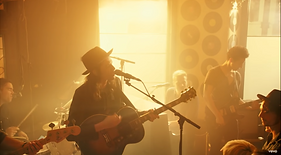
Most indie pop music video's includes a live performance from the artist which makes the audience focus on the talent the artist has. Live performance promotes the artist too. eg in the video James Bay - If You Ever Want To Be In Love
.png)
.png)
.png)
types of audience
Managerial Audience
The managerial audience may or may have more knowledge than the lay audience about the subject, but they need knowledge so they can make a decision about the issue.
Any background information, facts, statistics needed to make a decision should be highlighted.
The “experts” may be the most demanding audience in terms of knowledge, presentation, and graphics or visuals.
Experts are often “theorists” or “practitioners.”
For the “expert” audience, document formats are often elaborate and technical, style and vocabulary may be specialized or technical, source citations are reliable and up-to-date, and documentation is accurate.
Academic Audiences
Assuming you are writing a paper for a class, ask yourself who is the reader?
The most important reader is probably the instructor, even if a grader will look at the paper first. Ask yourself what you know about your teacher and his or her approach to the discipline.
Do you know, for example, if this teacher always expects papers to be carefully argued? Has this teacher emphasized the importance of summarizing cases accurately before referring to them?
Will this professor be looking for an “argument synthesis,” showing how the cases all support one point or will this professor be more interested in seeing how the cases complicate one another?
In other words, take the time to brainstorm about what you’ve learned about the teacher to help you meet his or her expectations for this paper.
You probably know more about the teacher than you think, and asking questions about how the teacher treats this material in class will help you remember those details to help you shape your paper.
Nonacademic Audiences
Nonacademic audiences read your writing for reasons other than to grade you. (Some teachers assign papers specifically asking students to write for non-academic audiences).
They will gain information from your writing.
Think about writing a newsletter or a resume: an audience read these for information, only how they use the information varies.
A nonacademic audience involves more than writing. Consider the following:
-
You’ll have to determine who the audience is.
-
You’ll have to think about what is an appropriate format to use.
-
You’ll have to consider what is and is not an appropriate topic for your audience. (If you don’t have one already.)
Conclusion
It is vital to know your audience to tailor-made your message according to the audience; so that the message is understood by the targeted audience.
Demographics and Psychographics of Audiences
Pop music is the most mainstream music given most airplay across radio and TV shows, therefore reaching a mass audience. This mass audience is outweighed by people aged between 8 and 22 contributing to a major value of listening figures. These are the target audience for our music video as well. People of these ages generally fall under the lowest category of the demographic scale meaning that producers make certain choices to direct their product towards these targeted groups and maintain a consistent fan-base. For example, music and visuals will be available straight away on platforms used by teenagers such as Spotify and YouTube at no cost. Advertisements will be deliberately placed in places where young people go such as city's/towns, bus stops and near universities to catch their attention and encourage them to purchase the product.
Demographics also effect the production of pop themed media texts outside of marketing too, these being through creating representation and meaning within the product relative to that of the interests of the target audience. For instance, this includes products such as music videos and teaser trailers. Content of these videos will vary dependent on the intended effect the institution wish to create. Mise-en-scene is adjusted relative to this, for the soul purpose of capturing the audiences interest encouraging them to consume the product.
Application of psychographics' table to consumerism of media products from the music industry would be, for instance, rap music is often aimed at strugglers to take their mind off their current situation and make them believe they may escape it one day. This music generally reflects their way of life subjecting around drugs, sex, alcohol and partying. Unfortunately, the artists are often misleading, exaggerating their situation and building a sense of false hope for the listeners, keeping them listening to the music as it makes them feel better about themselves.
having some experience
.png)
.png)
.png)
.png)
.png)
.png)
indie popvideo analysis
synopsis
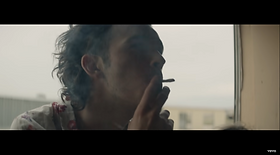
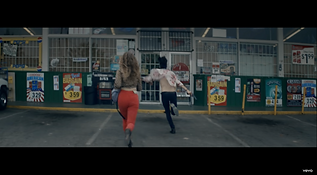
In this music video, only the lead singer of the band features enough to show any real representation of character. The lead singer plays a seemingly dangerous character who appears to be quite romanticized. Throughout the video, he drinks, smokes, does drugs and plays with a gun whilst clearly intoxicated, all before robbing a supermarket and getting shot. These actions should in theory make him seem like an unappealing person, however, I think that the presence of a lover throughout the events of the video secure the artist with a desirable 'bad boy' type persona. This song is about two lovers who aren't good for each other. She's having second thoughts but they keep putting off the inevitable end of the relationship. In doing so they are robbing each other of happiness.
.png)
.png)
.png)
concept
The concept of the song, about an ill-fated robbery heist, was inspired by the 1993 film True Romance, particularly Patricia Arquette's character Alabama Worley. "'Robbers' is about a heist that goes wrong," Healy added. "I suppose you can read it as a metaphor, and a girl who's obsessed with her professional killer boyfriend. It's a romantic ideal."
.png)
.png)
.png)
.png)
.png)
relation of the visuals and lyrics
The relationship between the visuals and the lyrics are the stronger. He tries to cover all the scene in the lyrics.
shots and editing
Most of the camera shots in this video appear to have been filmed using a handheld camera. The shots have an unstable, wavering quality which makes the video appear more realistic, and increases elements of tension and chaos at certain points during the video. The realistic quality that using a handheld camera added to the video allows the audience to feel more involved in the narrative, as if they are watching the events unfold from the perspective of somebody who is actually in the video. Establishing shots haven't really been used in this music video, as it focuses mainly on the story involving the two main characters- setting is not a key element of this video. Close-up shots are used throughout this music video in order to emphasis the intensity of the narrative and to show the emotions of the characters through their facial expressions. The editor has used simple jump cuts to change between clips/camera shots in this music video. This emphasizes the realism of the video and doesn't distract attention from its plot. At the start of the video, the editing is fairly slow paced, reflecting the relaxed atmosphere of this part of the narrative. As the story line dramatists, however, the editing becomes fast paced, the clips shorter and cuts more jumpy. This highlights the intense and chaotic mood that has developed within the video. The tones in this music video are quite subdued and muted, so a denaturation filter may have been added to the clips during the editing process to create this effect.
theories
I think that elements of Andrew Goodwin's theory can be applied to this music video. For example, the video expresses genre characteristics such as a muted and dull colour scheme, and the involvement of both concept and narrative aspects. There is also some possible involvement of intertextuality in the video (Bonnie and Clyde reference mentioned above). The song is titled 'Robbers', and the narrative appears to show a couple robbing a supermarket together. The lyrics of this song make several references to guns, and a gun is featured in several clips in the video, so in this way, there is a link between lyrics and visuals, and Goodwin's theory can be applied.
Laura Mulvey coined the term 'Male Gaze', and believes that film audiences must view characters from the perspective of a heterosexual male. Her 'gaze' theory is made up of 3 aspects- how men look at women, how women look at themselves and how women look at other women.
The 'Male Gaze' theory states that the camera lingers on the curves of the female body, and the events that happen to her afterwards are largely based upon the male's reaction to this. It also demotes women to the status of objects, and gives the female viewer a secondhand experience of the narrative through identification with the male on screen.
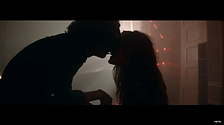
I think that this theory can definitely be applied to The 1975's 'Robbers' music video. There are several shots where the camera seems to linger on the curves of the body of the female protagonist, and her main purpose in the video appears to be looking after or fulfilling the sexual desires of the male protagonist. I don't think that this quite denotes her to the status of an object, yet it still gives the audience the impression that she is purely a backup character to the male protagonist.
.png)
.png)
.png)
.png)
audience reception
Stuart Hall's Audience Reception Theory demonstrates three ways in which an audience might read a media text. The theory of preferred reading is when the audience reads the text the way the author intended them to. The theory of negotiated reading is when the audience reads the text the way the author intended, but also uses their personal experiences and interests to modify their interpretation. The third theory is the op positional reading theory, where the readers' social position means that they have an opposing relation to the text. Therefore, they reject the reading.
For The 1975's 'Robbers' music video, I think that the theory of preferred reading is the most relevant as there is a clear story line for the audience to follow, therefore, they view the video the way that the artist intended. The theory of negotiated reading could also be applied to this video as a viewer could use their own positions and experiences to interpret certain elements of the story line. The Uses and Gratifications theory suggests that audience members are not passive, but take an active role in integrating media into their lives. It also states that audiences are responsible for choosing certain medias to meet their needs. It focuses on what people choose to do with media rather than the effect that the media has upon them. I think that an audience might watch this video to fulfil entertainment needs, as it has a compelling and gripping storyline.
representation
In this music video, only the lead singer of the band features enough to show any real representation of character. The lead singer plays a seemingly dangerous character who appears to be quite romanticized. Throughout the video, he drinks, smokes, does drugs and plays with a gun whilst clearly intoxicated, all before robbing a supermarket and getting shot. These actions should in theory make him seem like an unappealing person, however, I think that the presence of a lover throughout the events of the video secure the artist with a desirable 'bad boy' type persona.
inter-sexuality
There are no clear inter textual references within this music video. This is probably due to the genre being Indie Pop- the association of mainstream media is not a common feature for an Indie Pop music video to have. However, this music video could be interpreted as a homage to Bonnie and Clyde as it depicts a boy and a girl who are madly in love committing crime together.
misc en scene
The colors shown in this music video are quite dull and desaturated (mentioned above)- an effect that was most likely added during the editing process. This type of color scheme seems to be popular within music videos of the indie pop genre, so in this way the band have conformed to a stereotype of their genre. The lighting in this music video appears to be purely natural, which again emphasizes the realism of the narrative. There are some scenes in the video where the lighting creates artistic effects, for example when the two lead characters can be seen together as silhouettes. Professional lighting may have been used here in addition to natural lighting in order to create this effect. These types of artistic shots are common among music videos within the indie pop genre, and add interesting conceptual elements to narrative videos. I think that the clothing worn by the characters in this music video could be viewed as typical of the genre. The female protagonist of the video can be seen mostly wearing outfits including plain high waisted jeans or shorts with patterned cropped tops. The clothing she wears in the music video is unusual and unique, and therefore fits the indie aspect of this genre. The male protagonist dresses predominantly in black, ripped skinny jeans with various shirts worn throughout the video. His clothing is edgy and fairly distinctive, which also fits the indie aspect of this genre. I don't think that setting plays a key part in this music video- the story line is so captivating and focused on that the settings of each scene appear to be a minor background detail. The establishing shot shown below appears to be the only point in the video where the setting is the main focus of a shot. It creates an air of mystery, as commotion and gunshots can be heard from inside the building, yet the audience are unable to see what is actually happening. They are left to assume what happened from the events that occur before and after this particular shot.


________________________________________________
synopsis
That the song is talking about growing out of whatever situation/location you're in as your interests change. The yearning in your heart are your inspirations, your hopes, your dreams. When life gets stagnant it's not uncommon for a growing unrest to begin. But, this song, in my opinion, isn't simply a manifestation of that unrest; it's a reassurance. Ben's telling you not to be discouraged if you're not satisfied with where you are or where you're going. Instead, he is encouraging you to "build it bigger than the sun": in other words, to fuel the desires or inspirations in your heart and see where they lead you.
Change, of any kind, however, is often difficult. We're creatures of habit. Our minds are often at war with our hearts, and this is where the "doubt within your mind" comes into play. We delude ourselves into thinking that what we truly want in our hearts isn't possible. We downplay our dreams or see them as wrong. To this, they simply say, move along. Doubt is not only unhelpful, it's inhibiting.
.png)
.png)
.png)
concept
"Tourist" is one of the most poppy songs that Death Cab has recorded, making it different to most of the other material in the band's catalog. Gibbard told MTV News: "It's weird, there's not really a narrative in the song. I feel like the lyrics and the verses are kind of more, just, affirmations than anything else; they're not really deep thoughts. But I feel that there's a kind of particular narrative within the bridge that kind of ties everything together, and balances out the affirmations in the verse. And that's the thing I'm most fond of in the song, is that, you know, the verses are catchy and light - it's a pop song - but at the same time, there's a weight to it, that you kind of get in the bridge that kind of ties it all together."
shots and editing
This music video contains a wide variety of shots including tracking shots, ariel shots, mid shots, long shots and close ups. Tracking shots seem to be a common feature of Indie Pop music videos, so it is fitting that this video contains a lot of this style of camera shot. Tracking shots have also been included in this music video to follow the artist from setting to setting, which moves the video along. Ariel shots have been used in this video to create visually pleasing and artistic clips of the dancers. This kind of shot is a popular feature of concept music videos, as it fulfils the criteria of making the viewing experience interesting for the audience. Close-ups, mid shots and long shots have been used in this music video to film the band from varying angles. This makes the video feel more enthralling as there is diversity on screen- the footage is of the same people, but the different shots distinguish the clips from one another.
theories
I think that elements of Andrew Goodwin's theory can be applied to this music video. For example, the video expresses genre characteristics such as the involvement of conceptual aspects. There are lots of close ups of the band shown in this music video, which also complies with Goodwin's theory. However, the colour scheme does not match the typically dull and muted tones of an indie pop music video, there are no links between lyrics and visuals, no links between music and visuals, and no intertextual references.
Laura Mulvey coined the term 'Male Gaze', and believes that film audiences must view characters from the perspective of a heterosexual male. Her 'gaze' theory is made up of 3 aspects- how men look at women, how women look at themselves and how women look at other women.
The 'Male Gaze' theory states that the camera lingers on the curves of the female body, and the events that happen to her afterwards are largely based upon the male's reaction to this. It also demotes women to the status of objects, and gives the female viewer a secondhand experience of the narrative through identification with the male on screen.I don't think that Laura Mulvey's theory can be applied to this music video, as the female body is not really focused on in a sexual way.
.png)
.png)
.png)
audience reception
Stuart Hall's Audience Reception Theory demonstrates three ways in which an audience might read a media text. The theory of preferred reading is when the audience reads the text the way the author intended them to. The theory of negotiated reading is when the audience reads the text the way the author intended, but also uses their personal experiences and interests to modify their interpretation. The third theory is the oppositional reading theory, where the readers' social position means that they have an opposing relation to the text. Therefore, they reject the reading.
For Death Cab for Cutie's 'You Are a Tourist' music video, I think that the theory of preferred reading is the most relevant as the video doesn't really appear to have any deeper meanings, so the audience interprets the video the way that the band intended.
representation
I don't think that this music video really highlights any significant representation of the band, however, I think that the mise-en-scene of the video allows the audience to make their own judgement about them. The band members are seen to be wearing all black suits, which light up with bulbs in bold colors. Wearing suits as opposed to a more casual style of clothing could show the audience that the band are professional and take their music seriously, while adding the bright flashing lights to their clothing gives the impression that they are not boring or mundane. I think that the overall concept of this music video showcases the band's creativity and their ability to come up with unique ideas.
inter-sexuality
There are no clear intertextual references within this music video. This is probably due to the genre being Indie Pop- the association of mainstream media is not a common feature for an Indie Pop music video to have.
mise en scene
The colours in this video are bright and bold, which contrasts with the typical muted colour scheme of an indie pop music video. Lighting and projection are big features in this video, so bright colours are necessary in order to ensure that the full impact of the lighting effects is carried across on screen.
In this music video, the band are shown to be wearing plain black suits. The suits light up with dotted bulbs in alternating colours as the band appear as silhouettes in front of a large screen playing a geometric graphic sequence. The suits match the setting of the video, as the stage and drum kit are lined with blue bulbs also. I think that wearing relatively formal clothing makes the band appear more professional, while adding the lights onto the suits shows the audience that while professional, they are not dull or monotonous.
This music video appears to be set in some kind of production space. This is made clear as the video progresses and shows aspects of the set such as large digital screens, a large performance space and various props, all of which were likely created from scratch exclusively for this video.
Lighting plays a big part in this music video, and features consistently throughout the sequence. I think that it could be argued that lighting is the central focus of this video, as it makes up a large part of the mise-en-scene, including costume and setting. The lighting in this music video is quite artistic and captivating, which makes it clear that this is a concept video.
questionnaire/analysis


